Blog

What Google’s Accelerated Mobile Pages (AMP) means for consumers, publishers, and the future

We now spend more time on mobile gadgets than on desktop devices. The mobile web experience is more important than ever, and overwhelmingly defined by content relevancy, timeliness, and above all, speediness.

Mindful web developers—given adequate budget allowances—strive to build mobile-first sites that provide lean, engaging experiences across different screen sizes and devices. These sites better retain their audience because the experience is enjoyable and, in some cases, because impatient readers will leave (“bounce”) rather than wait for a clunky web page. Because Google recognizes its customers’ preference for performant sites, it factors pagespeed into its search algorithm, boosting speedy sites in search results.

In spite of these incentives to minimize page weight, most websites are heavier than ever. High resolution displays ushered in huge images, and universal support for custom typography has us downloading fonts everywhere. While the renaissance in front end toolkits like jQuery and React.js eases development and alleviates server-side scaling, it has done so at the expense of pushing more assets and processor strain to the browser. Most problematically, today’s website monetization and measurement tools often deliver heavy (and invasive) ads with little incentive to improve.

Much of this “bloat” has been obfuscated by our increasingly powerful devices, improving mobile broadband connections (especially among the “creative” class), and increasingly competitive browser technology. Even so, publishers are clearly testing (or even lazily trampling) acceptable boundaries, creating an opening for ethically gray solutions like iOS 9’s content blockers, and more closed platforms like Apple News.

Enter the Accelerated Mobile Pages (AMP) project: an open source initiative based on existing open web standards led by Google, touting noble intentions to improve the mobile web experience by providing standardized, lightweight guidelines and tools for developers. AMP HTML versions of web pages trade complex functionality and capabilities for lightness, simplicity, and a focus on content, resulting in near instant load times.

Accelerated Mobile Pages

While there may be more transformative long-term potential for AMP as a framework, in the near-term, Google’s initiative is hyper-focused on improving news and media consumption. In essence, AMP competes with the self-contained, largely closed, and far more restrictive experiences offered by Apple News, Facebook Instant Articles, and the rumored “long-form format” coming to Twitter (among others). Publishers opting to offer AMP’s lean presentation will be rewarded with increased visibility in mobile search results for news, including Google’s News Carousel: the highly coveted positioning at the top of mobile search results.

Backed by Google and already in beta testing with some of the largest news organizations, AMP is poised to become a standard feature for content-centric websites.
Read More on What Google’s Accelerated Mobile Pages (AMP) means for consumers, publishers, and the future

The First WordCamp Sacramento

WordCamp Sacramento

Sacramento, CA

Speaking Sponsoring

Rumors of a WordCamp Sacramento started in 2012, after I rebooted the WordPress Sacramento Meetup. Fast forward to 2015: there are 4 meetup organizers and northern California’s WordCamp San Francisco has been displaced by WordCamp US. The Art Institute of Sacramento volunteered its campus for an event, a professor offered himself as lead organizer, and indispensable local leaders stepped up to take an active role.

I’m proud to have played a small role in co-organizing the first WordCamp Sacramento, which takes place tomorrow, and even more proud that 10up is sponsoring the event. I’ll be joined at the event by three 10uppers who are speaking: Sacramento’s own Ben Ilfeld, who will be teaching site advertising basics, Northern California’s Vasken Hauri, who promises to improve lives with event-driven caching, and Luke Woodward, joining us from out-of-state to debut “Robots Write the Docs.”

2015 Annual Summit: Boulder

Boulder

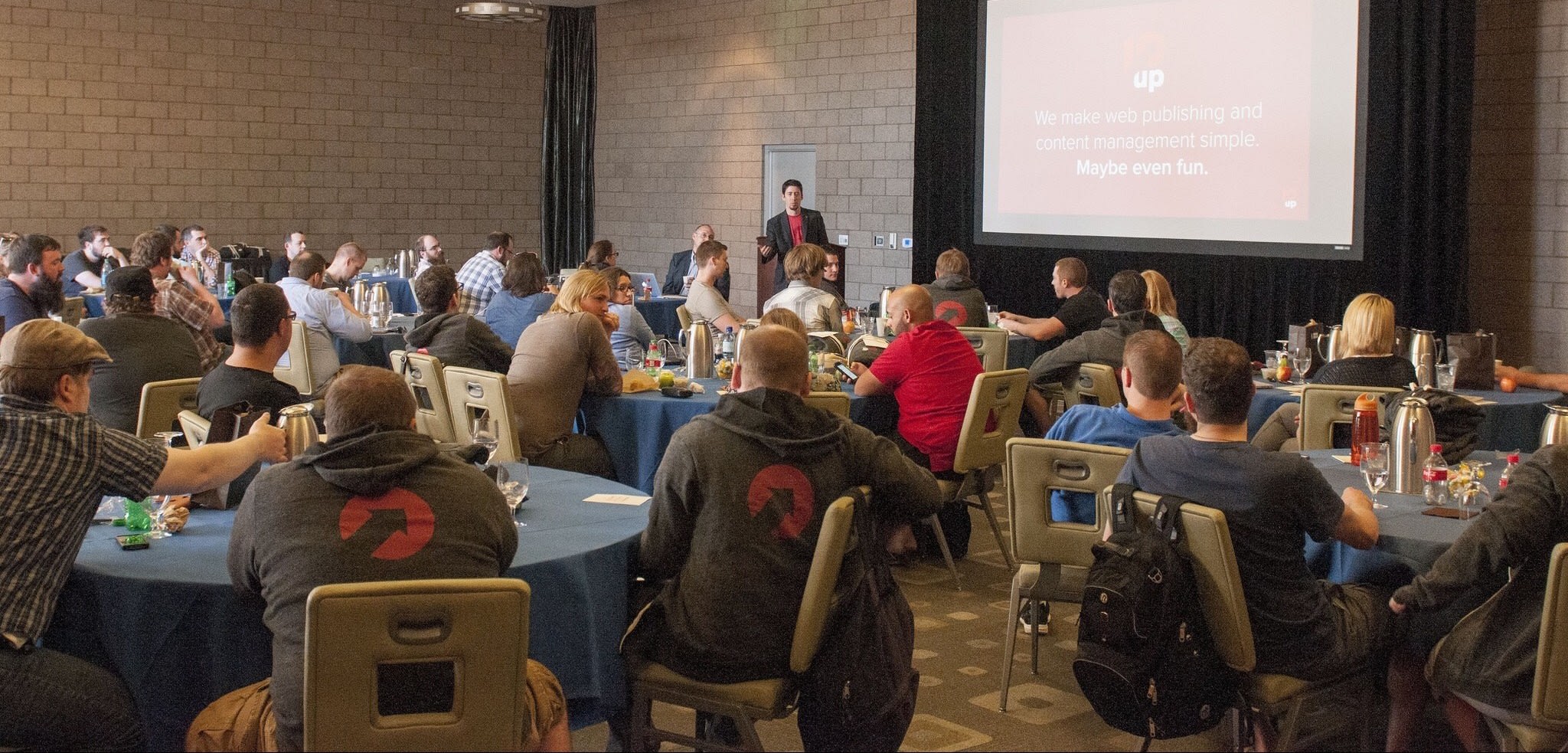
Every year, around this time, our distributed team gets together for a few days to focus on developing our soft and technical skills, to celebrate our past and plan for our future. The 2015 summit is next week at a beautiful hotel in downtown Boulder, Colorado. It begins Monday afternoon with an optional tour of the Celestial Tea Factory and a mouth-watering prefixed dinner catering to myriad 10up diets. Our summit ends on Thursday night, with most 10uppers traveling home on Friday.

Read More on 2015 Annual Summit: Boulder

Scaling StoryCorps.me and the WP JSON API

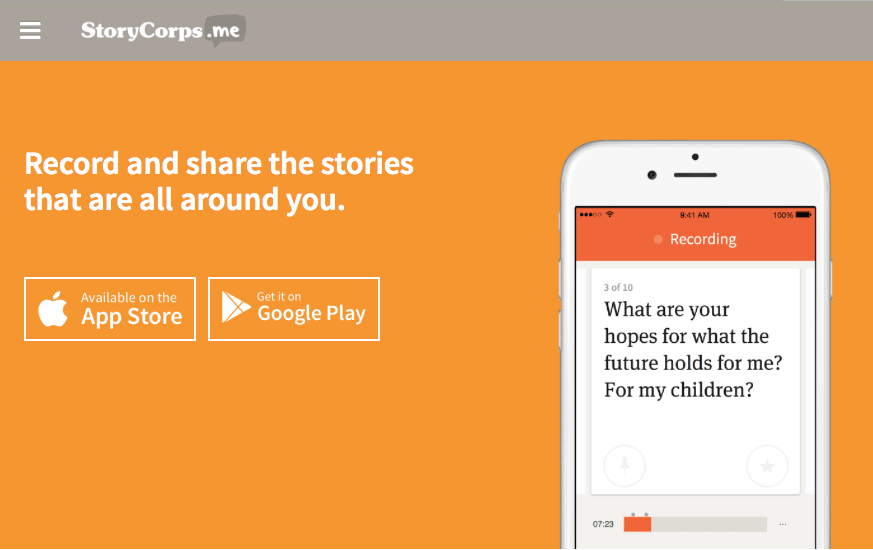
We had the privilege of working with StoryCorps to help them engineer a reliable, scalable WordPress implementation for their new, TED prize winning project. StoryCorps.me enables anyone to record and share powerful stories using an iOS and Android app; the app’s infrastructure is built on WordPress, and leverages the WP REST API.

We built a custom, elastic infrastructure on Amazon Web Services, provided strategic consulting and direction for the WordPress JSON API integration with the app, and comprehensive code review and auditing for the custom theme and plugins built by StoryCorps’s internal developers.

Even as the app was unveiled at TED, and picked up in subsequent press coverage from NPRFast CompanyRecodethe Globe and MailForbes, to name a few, the site and its deep app integrations have scaled and performed like a champ.

PostStatus published a detailed, insightful write up that describes the project and technical implementation, including kind words from their program manager:

Dean noted, “You have to be willing to completely submit to the process.” He says it wouldn’t have succeeded if 10up and [app developer] Maya weren’t committed as StoryCorps to the success of the project.

Be sure to check out their coverage, and try out StoryCorps.me. You can find the app that relies on their WordPress build on the iOS app store and Android Play.

10up turns four

Four years ago, 10up came to life with a couple of clients, and a centrally located team of one. Today, our 100+ team of engineers, designers, and strategists span the globe,  privileged to serve Fortune 500 (and 50… and 1…) clients, as well as an array of well respected startups and lesser known brands invested in first class technology solutions. Here are a few highlights since our last birthday:

Read More on 10up turns four

Jake Goldman

Three and a half years after her very first props in WordPress core and two years after becoming a core committer, Director of Platform Experience Helen Hou-Sandí has been promoted to Lead Developer for the WordPress project. She joins 5 other leads atop the WordPress credits screen, including project founder Matt Mullenweg. 10up is now the first and only consulting agency to have the honor of a Lead Developer in its ranks, as well as the only agency with not just one, but two WordPress release leads. We’re proud of Helen, and proud of our growing contributions.

WP Engine Mercury: Building a WordPress Jet Engine

WP Engine MercuryPutting problem solving before technology often means figuring the technology out – sometimes as we go. From push notifications and search to standardizing local development, we’re most proud of contributions that advance markets and platforms, not just 10up.
Months ago, WP Engine, a market leader in managed WordPress hosting, reached out to us for candid feedback with an eye toward the platform’s future. The Labs team was determined to invent not only the future of WP Engine, but the future of WordPress hosting; to be as disruptive as WP Engine was in its earliest days. From better hardware and developer tools to bleeding edge performance technology, the vision was compelling, and it was clear that from CEO Heather Bruner to Founder & CTO Jason Cohen, they were all in.

Its 10up’s position that a rich, forward-looking ecosystem of managed hosting choices is vital to the success of a web platform; we’re only as strong as the weakest part of our stack. Membership, integrated social engagement – even e-commerce – are increasingly entangled with content and publishing, and there are, unsurprisingly, a dearth of hosted WordPress choices tackling these use cases. As the fail-whale oft-reminded us, these cases are very hard to scale, particularly with run-time languages like PHP atop traditional SQL databases. Just ask Facebook. (Actually: we did. Read on.)

WP Engine wanted to tackle this problem. They had us at “do you want to help us build it?”

Read More on WP Engine Mercury: Building a WordPress Jet Engine

10up takes WordCamp San Francisco 2014

WordCamp San Fransisco was the first WordPress conference, has historically remained the largest (certainly on the North American continent), and is home to WordPress co-founder and project lead Matt Mullenweg’s annual State of the Word address.

In 2012, we brought the “whole team” out (all 14 of us), and watched with delight as our own Helen Hou-Sandi was called out in the State of the Word as a rockstar. In 2013, we decided that taking a team of ~35 was neither logistically practical nor a great way for us to focus on team building, so we brought a contingent of 8, and were proud to showcase four speakers and see  Drew Jaynes called out as a rockstar.

1

WordCamp San Francisco 2014 is this weekend, and this time you’ll find a dozen (12) 10uppers roaming the conference. This year we’re proud to have 5 speakers participating:

  • On Saturday, Helen Hou-Sandi connects her training as professional musician with her career as a code poet.
  • Kicking off Sunday, Paul Clark inspires us by reminding how web publishing and WordPress can save lives and move governments.
  • The three “WordPress in Context” lightning talks on Saturday feature 2 10uppers – and one 10up alumnus! 10up CEO John Eckman and Senior Engineer Rachel Baker are joined by former Engineering Director (now a leader in the university system) Jeremy Felt.
  • Finally, our Creative Director, Taylor Aldridge, joins a set of Saturday lightning talks on Design & Business.

Read More on 10up takes WordCamp San Francisco 2014

Staying on top: 10up Learning Summit 2014

Around this time in 2013 we held a Developer Summit – an in person gathering of our team focused on skill building. We covered everything from PHP unit testing to JavaScript performance optimization, and even rolled out Varying Vagrant Vagrants. From SASS to duck punching, that summit influences how I write code today, when I still have the occasion to do so.

10up has grown since April 2013, not just in raw numbers (we’ve tripled), but in scope. Add a talented design team and nearly a dozen web strategists and project managers and our second annual “developer” summit already needs a rebranding: let’s call it a Learning Summit.

10up Summit Git Talk

This time, we’re taking over a resort in beautiful Scottsdale, Arizona. We’re kicking off on the afternoon of Tuesday, May 13, with practical activities focusing on the art of effective, consistent, and thoughtful client engagement. Wednesday we have three tracks filled with incredible workshops: design, engineering, and project management.

Read More on Staying on top: 10up Learning Summit 2014

A Conversation about the Future of WordPress

10up is a digital agency that hangs its hat on the viability of open source web platforms – WordPress in particular. We think WordPress is the platform of choice for content management and publishing, and we’ve built a team that shares these open values and grasps WordPress like few others. More than 25 of us have made core contributions, and we’re home to two core committers. Needless to say, as President, I spend significant time thinking about this platform, from its underlying code quality to the healthy – and less healthy – habits of its considerable community.

Where is WordPress heading? Where should it head? Where are the biggest opportunities? How can WordPress continue to dominate the CMS space in another 5 years? Does it make a good app platform? Is there another platform we should be mastering?

So when WP Elevate’s Troy Dean invited me to participate in a live panel on the “future of WordPress” with leaders like WordPress founder Matt Mullenweg, Woo’s Scott Basgaard, and Modern Tribe’s Shane Pearlman (among others), I didn’t hesitate to accept.

You can catch WP Think Tank tomorrow (February 25) at 8 pm UTC / 12 pm Pacific / 3 pm Eastern.

Rumor has it that, based on the reception, this might not be the only episode of WP Think Tank!

WP Think Tank